
REAL PROJECT · MODULAR PACKAGING AND CUSTOM SOLUTIONS
From two conventional boxes to three-ampoule modules
Modular packaging for hair treatment ampoules
The modular ampoule packaging began with a specific brief: design boxes for 12 and 24 units. However, salons supplied treatments in sets of three ampoules. A1Pack therefore proposed a three-unit module that protects the contents, provides space for instructions and connects with others to form larger packs.
CUSTOM SOLUTIONS CASE STUDY · MODULAR PACKAGING
Modular ampoule packaging: a solution designed around use
A hair care company commissioned A1Pack to design two boxes: one for 12 ampoules and another for 24. Before drawing them, we observed how salons supplied treatments. Each customer took home three ampoules to continue the procedure. Meanwhile, retail boxes were left partly empty, and staff had to open them to check stock. The ampoules also travelled loose, without durable packaging or printed instructions. We therefore developed a modular ampoule packaging proposal based on the actual unit of use: three.
01 / 04
01 · The challenge: boxes that did not reflect actual use
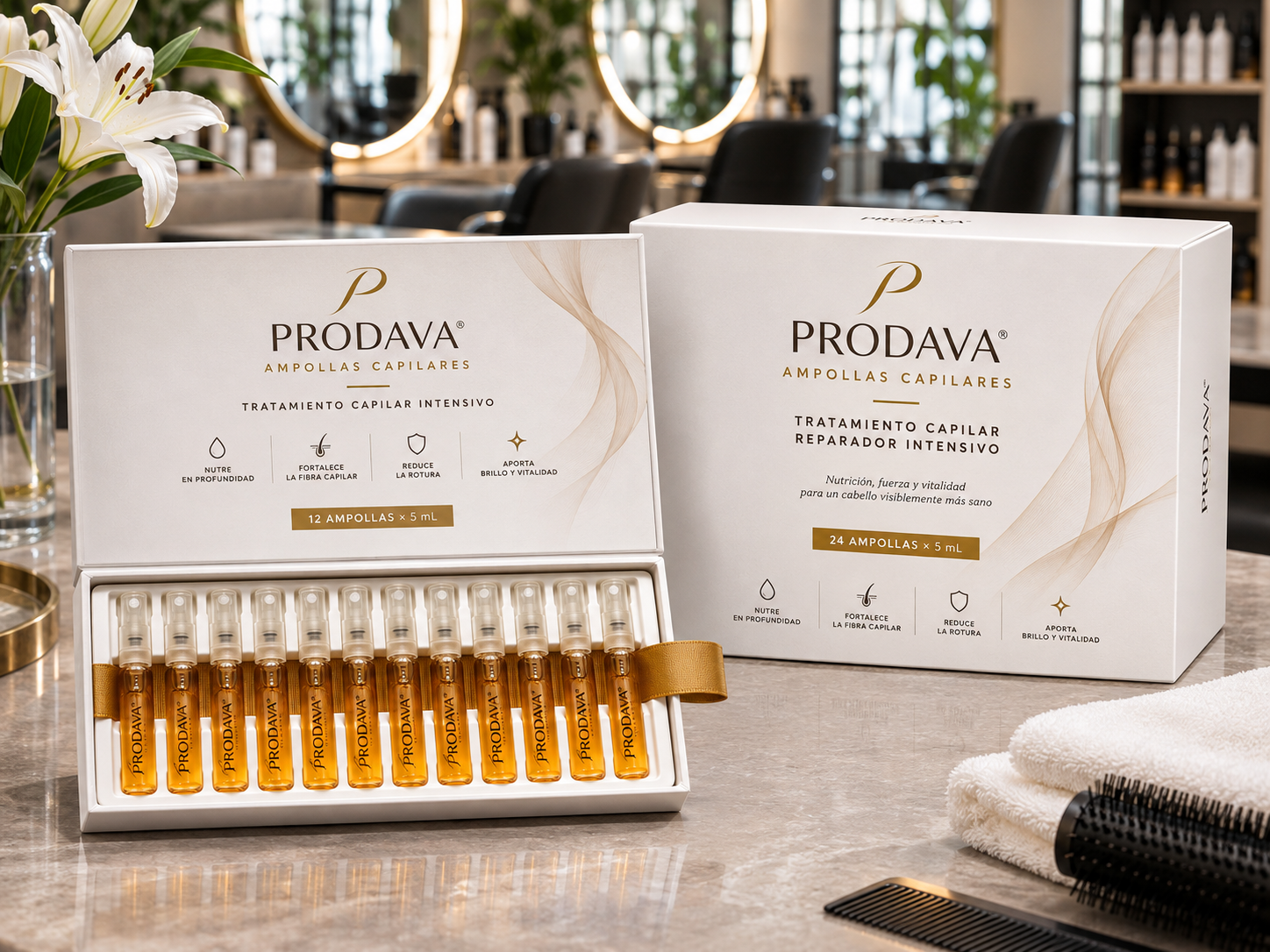
The brief seemed straightforward: design a box for 12 ampoules and another for 24. However, salons supplied treatments in sets of three for use at home. Large boxes were consequently left partly empty, and staff had to open them to count the remaining ampoules. Each customer also received the treatment in a bag that could tear. Without printed instructions, they had to remember the salon’s guidance. We discovered that the issue extended beyond box size: stock control, handover and subsequent use needed improvement.
- Initial brief: design two retail boxes, for 12 and 24 ampoules.
- Identified problem: partly empty packaging, manual stock counting and transport in fragile bags.
- Consumer need: carry three protected ampoules and consult the treatment instructions.
02 / 04
02 · The concept: modular ampoule packaging
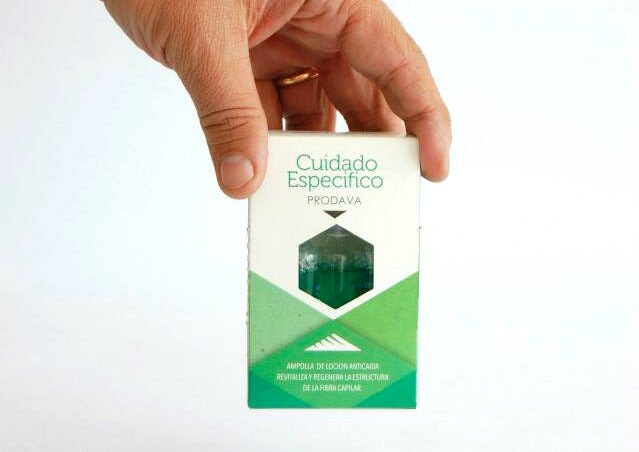
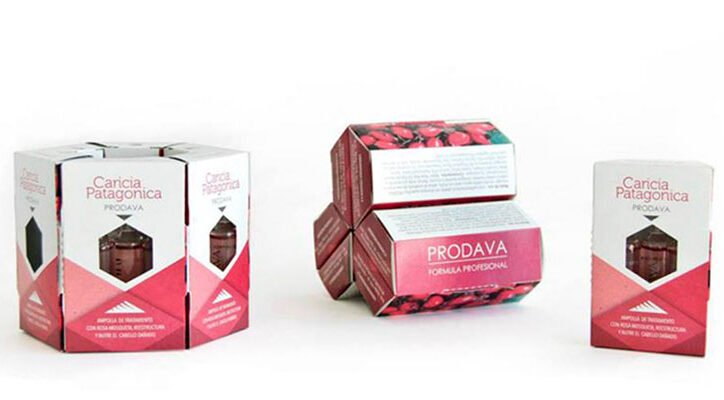
The solution began by changing the unit of design. We proposed modular packaging for three ampoules rather than two independent boxes. Each module could protect the glass and include treatment instructions. Four modules held 12 ampoules, while eight formed a set of 24. One structure therefore addressed both individual handover and retail pack formats. To define its identity, we took inspiration from chemical formulation chains and translated them into a system of connectable parts.
- Base module: three protected ampoules and a surface for explaining the procedure.
- Grouping: four modules hold 12 ampoules; eight modules hold 24.
- Identity: hexagonal geometry and connectable modules inspired by chemical chains.
03 / 04
03 · Structural design: protection and interlocking connections
We developed a hexagonal cardboard structure with interlocking connections to join and separate modules. First, we studied how to contain the glass ampoules. We then analysed assembly and handling within the salon. Each module also had to function as an individual take-home pack. Its surface provided space for instructions, reducing reliance on the user’s memory. Finally, grouping modules facilitated stock counting and the preparation of 12- or 24-unit packs.
- Structure: cardboard with hexagonal geometry and interlocking connections between modules.
- Organisation: three-unit modules to simplify counting and form larger sets.
- Information: space on the packaging to explain how to continue the treatment at home.
04 / 04
04 · The outcome: a system for sales and use
The development resulted in a proposal connecting three needs. For the brand, a modular ampoule packaging system that could form 12- or 24-unit packs. For salons, three-unit modules that were easy to count, separate and hand over. Consumers could take home protected ampoules with space to read the treatment instructions. The packaging therefore accompanied the product from distribution to use at home, retaining its function when split into smaller packs.
- Consumer: three protected ampoules with instructions available on the same pack.
- Salon: three-unit modules to organise stock and hand over each treatment.
- Brand: a connectable system to organise 12- and 24-unit packs.

Do you need to redesign packaging or develop a modular system?
At A1Pack, we study the use, protection and manufacturing of each product. Explore our custom industrial design solutions and tell us what you need to solve.
More product development case studies
Explore other real product development case studies where design helped resolve use and manufacturing requirements.
Modular Baskets for Cargill
Español English DEVELOPMENT CASE STUDY A basket that became a logistics solution The requirement was to present a selection of representative products in a basket. At A1Pack, we examined what happened before delivery: transport by van, office storage, stacking and assembly by reception staff. This approach led to an interlocking modular system designed for the […]
Pizza Box Advertising Campaign
Español English DEVELOPMENT CASE STUDY · ADVERTISING PACKAGING When a pizza box becomes an advertising medium In 2011, around the Copa América, we worked on a campaign for car dealerships. We developed a pizza box advertising system as an alternative to flyers that could quickly be discarded: a medium delivered to homes, with a useful […]
Alfajor Packaging Inspired by La Plata
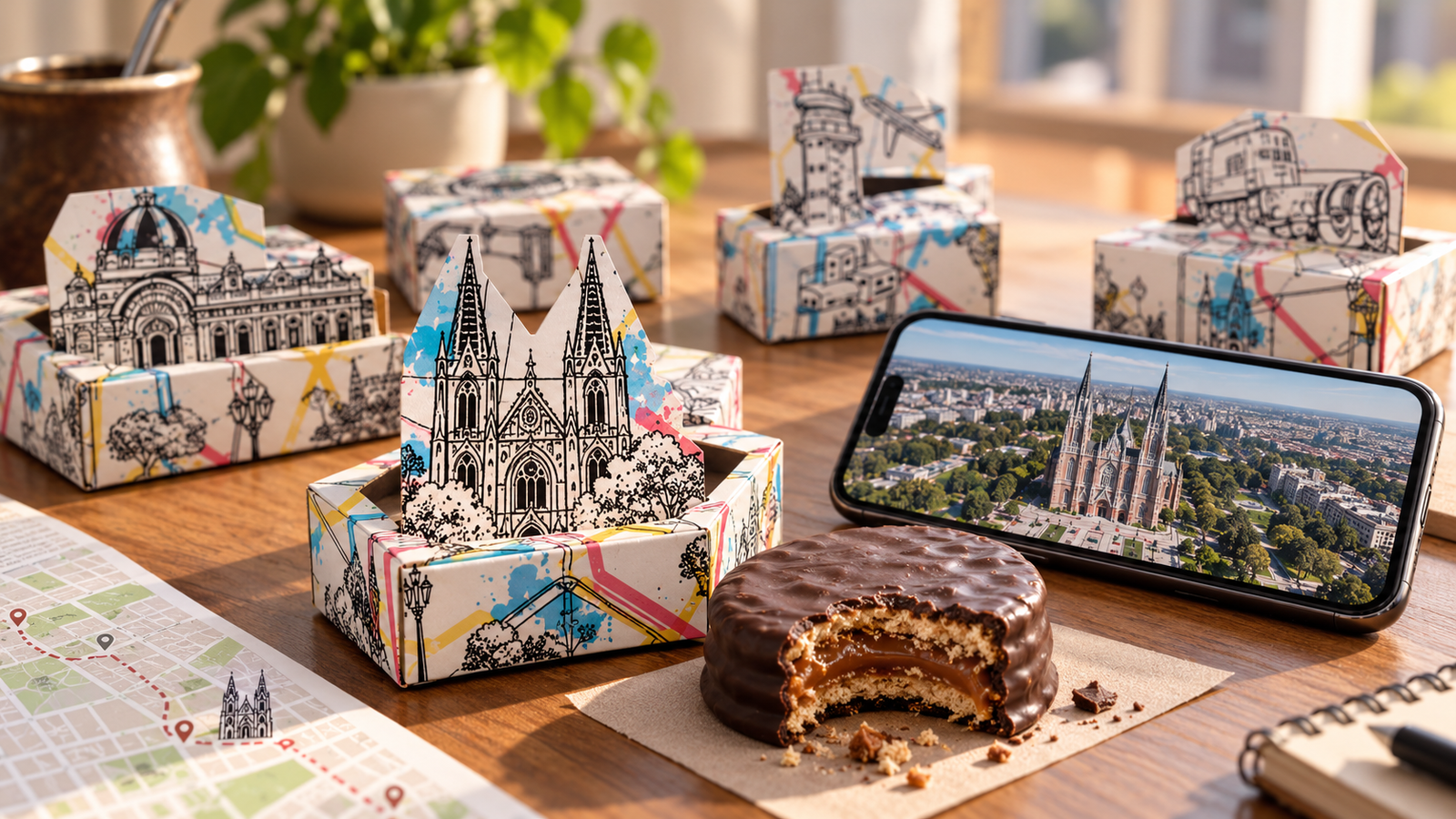
Español English DEVELOPMENT CASE STUDY · ALFAJOR PACKAGING An alfajor box that becomes a city experience The brief began with a box for giving twelve alfajores to visitors to La Plata. A1Pack proposed going beyond the container: twelve individual cartons linked to city locations, with pop-up figures created through cutting and folding, each connected by […]
Display Stands for the Fragata Libertad
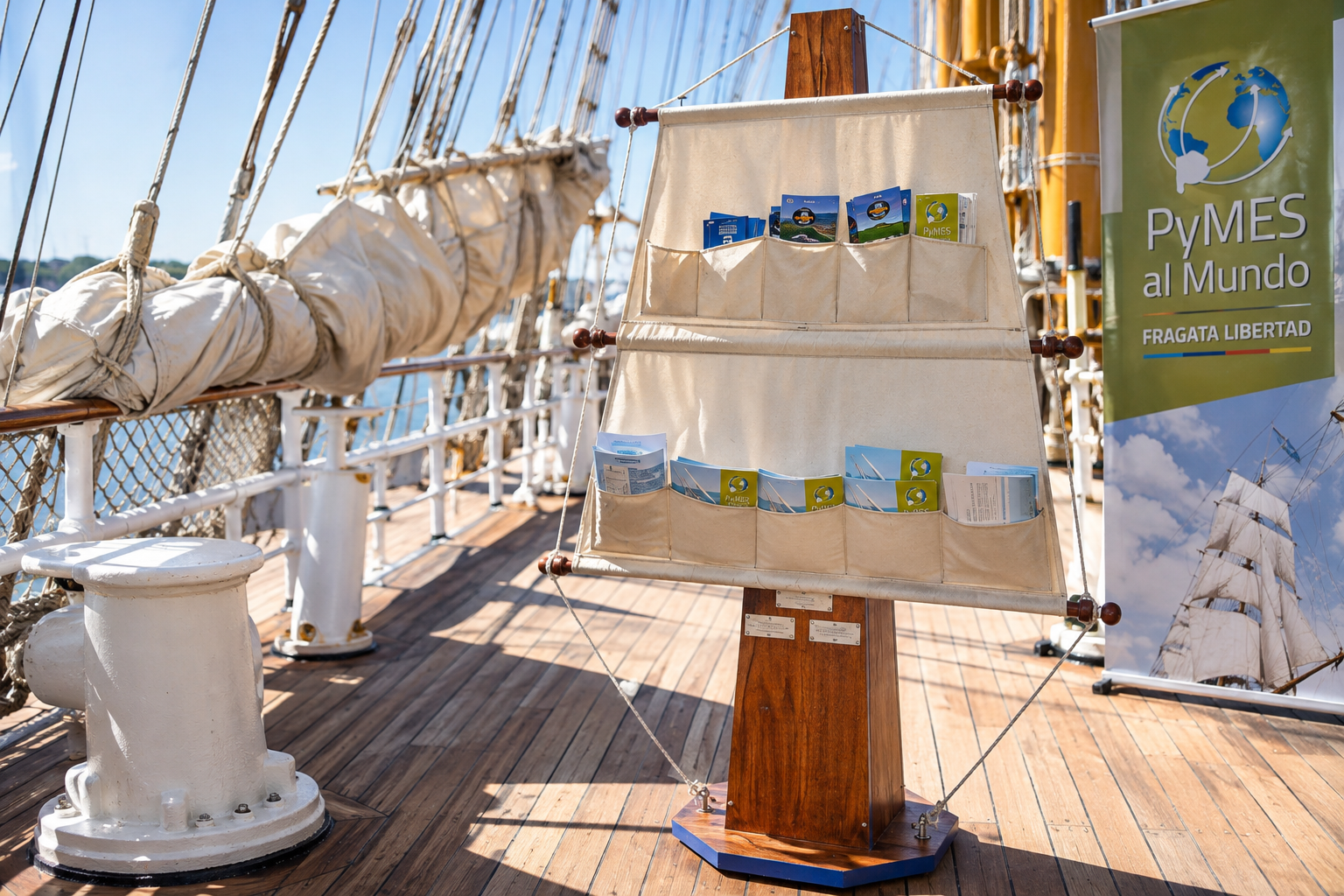
Español English DEVELOPMENT CASE STUDY · INSTITUTIONAL DISPLAY STANDS When a display stand becomes part of a ship’s identity In March 2017, A1Pack developed brochure display stands for the PyMEs al Mundo programme, presented aboard the Fragata ARA Libertad. We drew on the sail training ship’s sails, ropes and nautical tradition to create a demountable […]

The design changed when we observed how the ampoules were used.
We were asked to design two boxes: one for 12 ampoules and another for 24. Actual use, however, revealed a different scale: treatments of three units. We therefore designed a module that could be supplied individually or grouped with others. The change aimed to organise stock, protect the glass and communicate instructions. This approach to packaging as a system also relates to INTI’s approach to packaging, packing and logistics.