INDUSTRIAL PROTOTYPING • LOCAL MANUFACTURING • TECHNICAL BTL SOLUTIONS
Industrial design in Argentina: from functional prototype to actual production
A comprehensive methodology for physical product development that validates function, materials, and production processes for SMEs, entrepreneurs, and brands within the Argentine industrial landscape.
Industrial design in Argentina faces a constant paradox: the tension between an innovative idea and the technical constraints of a real-world production chain. At A1Pack, we understand that **applied industrial design** is the discipline that solves this equation, transforming concepts into manufacturable objects through a rigorous process of **industrial prototyping and technical validation**. It is not just about designing “what is visible,” but about delving into “how it is made,” “with what,” and “who it actually serves” [citation:2].
This article outlines our methodology for **physical product development**, ranging from initial technical analysis to final production specifications, adapted to local manufacturing capabilities and challenges.
-60%
Reduction of production errors through preliminary functional prototyping
+1
Technical iterations on average between concept and validated product
85%
Dimensional precision achieved in parts with tolerances of ±0.1mm
Applied industrial design: The critical gap: between the decorative prototype and the manufacturable product
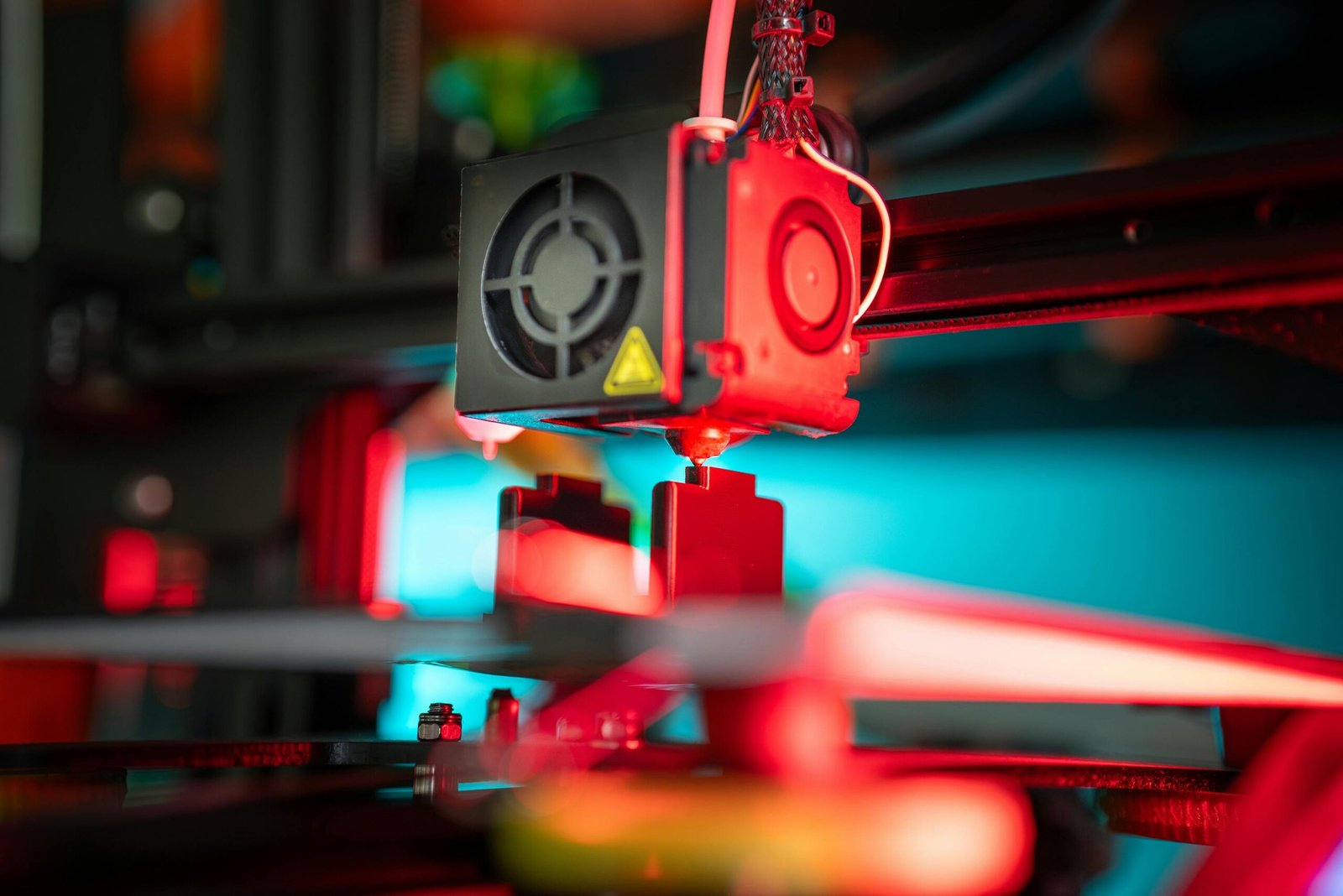
The primary risk in **physical product development** is underestimating the transition from a conceptual model to a mass-producible part. A prototype that validates only aesthetics can mask critical flaws regarding manufacturing, assembly, or cost. In Argentina, where tooling costs and initial production runs represent a significant investment for SMEs and entrepreneurs, this superficial validation can lead to costly production failures. Professional industrial design bridges this gap by integrating **manufacturing criteria from the very first iteration.
❌ Limited approach
- Prototypes that only validate form and visual appearance
- Design disconnected from available local manufacturing processes
- Theoretical material specifications, not validated in a real-world context
- Dimensional tolerances undefined or unachievable with local machinery
- Cost calculations based on assumptions rather than workshop quotes
✅ A1Pack comprehensive approach
- Functional prototyping: validates mechanism, strength, and real-world usability
- Design for Manufacturing (DFM): integrates injection molding, thermoforming, or CNC constraints from the start
- Material-process selection: based on local availability, cost, and performance
- Complete technical specifications: drawings with geometric tolerances and surface roughness details
- Actual cost model: includes tooling, cycle time, and material waste
“In the context of Argentine manufacturing, good industrial design is not the one that looks best in a render, but the one that is manufactured with quality, assembled without rework, and kept within budget.”
Materials and processes for custom manufacturing
The final selection depends on a technical analysis evaluating functionality, volume, cost, and local market availability. At A1Pack, we work with a wide range of possibilities:
- Plastic injection molding: For medium to high-volume production runs. We apply DFM (Design for Manufacturing) principles, incorporating draft angles, uniform wall thicknesses, and tolerances of ±0.1mm.
- Thermoforming: For blisters, displays, or containers. We optimize the draw ratio and minimize sheet waste.
- Digital manufacturing (CNC, laser cutting): For prototypes, short production runs, or wood/MDF parts. This allows for maximum geometric flexibility.
- Sustainable and bio-based materials: We innovate using biocomposites derived from agro-industrial by-products—a trend supported by INTI in Argentina.
- Cardboard and corrugated board: Not just for packaging. We develop semi-rigid structures for displays or products, adhering to FEFCO standards.
Prototyping using the **final material or a close substitute** is non-negotiable. It allows for the detection of shrinkage, rigidity, or assembly issues before the production tool is created.
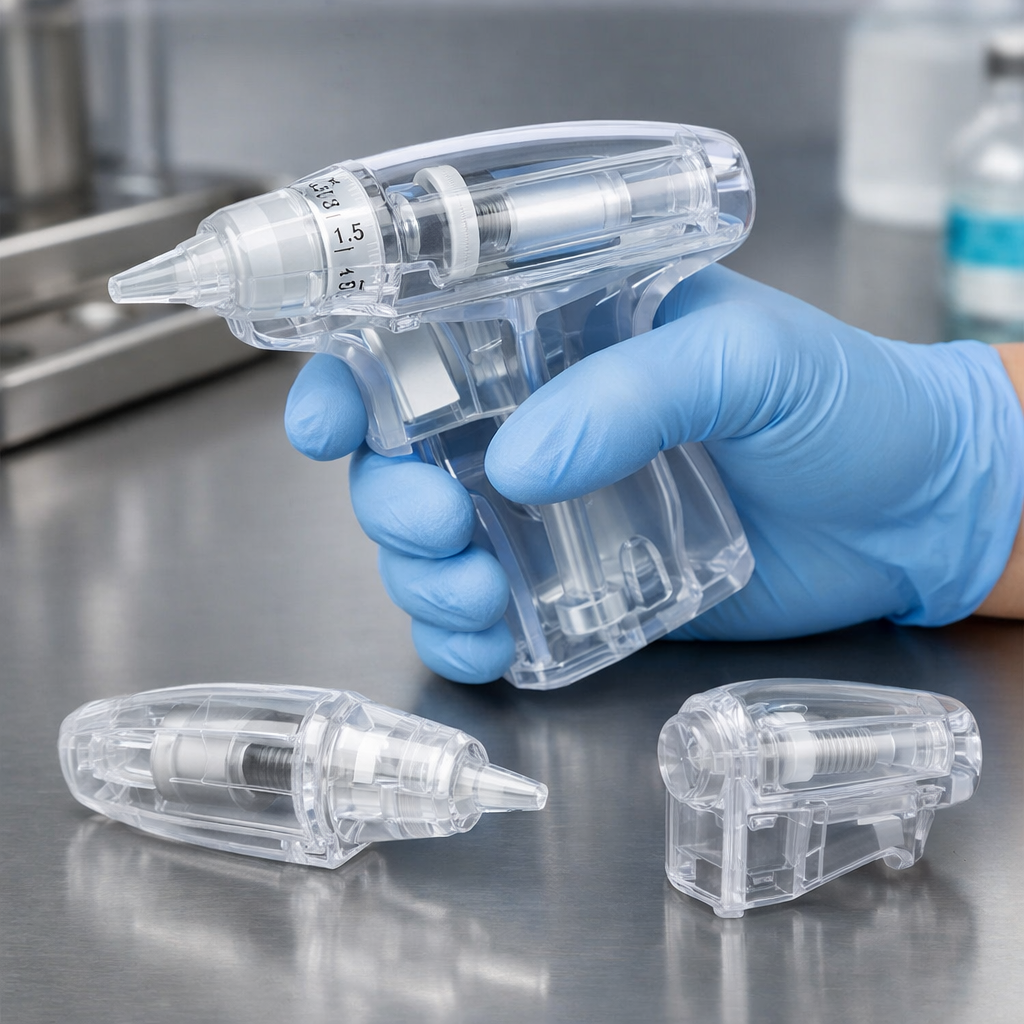
Example: development of a single-use medical dispenser
A laboratory needs a device to dispense exact doses of a sterile gel. The challenge combines hand ergonomics, a reliable dispensing mechanism, and manufacturing using aseptic medical-grade material at a cost viable for a disposable product.
- Technical analysis and benchmarking: Study of similar devices, medical material regulations, and sterilization processes.
- Conceptual design and low-fidelity prototyping: Three ergonomic alternatives modeled in 3D and prototyped in resin to validate grip and the basic mechanism.
- Functional prototyping and material selection: Prototype in transparent polycarbonate (PC) to test the seal, dispensing, and stress resistance.
- Validation and adjustments: Tests with simulated users (wearing gloves) and tolerance adjustments for the press-fit assembly of the two body halves.
- Production definition and documentation: Specification of medical-grade PP for injection molding, technical drawings with mold tolerances, and quote management with injection molders.
TECHNICAL CRITERIA FOR SUCCESSFUL DEVELOPMENT
Fundamental principles we apply to every industrial design and product development project:
- Iterative prototyping: Fail fast and cheaply at the prototyping stage, not on the production line.
- Design for Assembly (DFA): Minimize the number of parts and assembly orientations to reduce manual labor costs.
- Conscious material-process selection: The best material isn’t the most expensive one, but the one that fulfills the function at the optimal cost for the production volume.
- Impeccable technical documentation: Clear manufacturing drawings—including tolerances, finishes, and material specifications—serve as the contract with the supplier.
- Knowledge of the local manufacturing ecosystem: Design within the actual capabilities of Argentine workshops and factories [citation:9].
- Planned scalability: Anticipate from the start how materials or processes will change if volume increases (e.g., shifting from machining to injection molding).
These criteria turn industrial design into a strategic tool rather than an expense, reducing the overall risk of the physical product development project.
Conclusion: industrial design as an investment, not a cost
In the Argentine market, where capital for productive investment is scarce, skipping the stages of **industrial prototyping and technical validation** is a risk that few SMEs or entrepreneurs can afford to take.
At A1Pack, we apply a methodology that ensures the product is not only desirable and usable but, fundamentally, **manufacturable and viable**:
- Technical viability: Mechanisms, structural integrity, and functionalities validated through prototyping.
- Production viability: Processes and materials selected based on target volume and the local supply chain.
- Economic viability: Final unit cost aligned with the client’s business model.
- Usability: Ergonomics and user experience tested under real or simulated conditions.
The result is more than just an object; It is a **validated productive asset** that can be manufactured with confidence, scaled predictably, and compete robustly in the market.
Frequently asked questions about industrial design and product development
DO YOU HAVE A PHYSICAL PRODUCT PROJECT THAT REQUIRES TECHNICAL DEVELOPMENT AND PROTOTYPING?
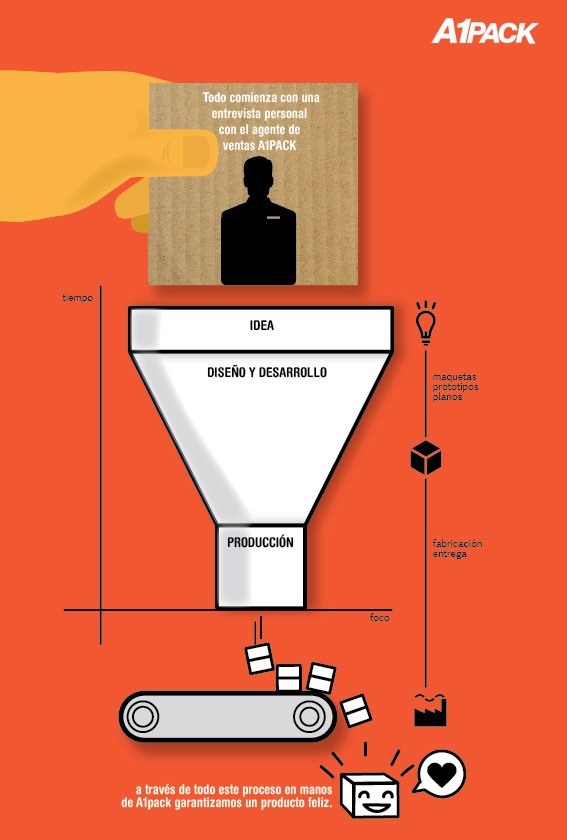
If you have a concept, a sketch, or a product that needs redesigning for manufacturability, let’s talk. At A1Pack, we apply **industrial design with a technical-production focus** to transform needs into manufacturable specifications. We don’t sell hype; we offer a clear, iterative process focused on real-world viability within the Argentine industrial ecosystem.
- We start with a technical analysis of the problem
- We validate using functional prototypes, not just mock-ups
- We define the optimal process and material for your volume and cost requirements
- We prepare the technical documentation for manufacturing